Thursday, May 3, 2012
Raindrops on Roses...
I love superhero movies. I’m not an avid reader of the graphic novels, the pages these superheroes are often plucked from, but I find myself loving these films. Not all are good, in fact some are woeful (The Green Lantern…), but the ones that do it best…well, they have a special place in my heart.
I’m writing a television series at the moment tentatively titled Extra Ordinary. It’s about two twenty-somethings who are entering their quarter life crisis with the additional burden of having superhero powers. So now they have to struggle with career and relationship woes and the after-work commitment being in a superhero league requires. I’ve written drafts for the first three episodes and have started on the fourth. I want it to be made in Australia, because I think we need some more superheroes in our lives. And in the superhero film, the events that lead to the super powers are often a catalyst for the person to do the right thing and save the world. What I want to ask is, ‘what if it isn’t?’ I mean, if getting super powers can’t motivate you to change your job and strive for a career you’re passionate about, what can?
So what do I love most about superhero movies? I’ll tell you.
1. Superheroes can do cool shit
This one seems really obvious. But for that love of the cinema that revels in pure spectacle, seeing cool shit performed by cool people is just plain cool. They can stop trains with their bare hands, fly, beat people up, and have amazing mental powers. And some can even shoot laser beams from their eyes. Awesome sauce.
2. Superheroes remind us of that eternal struggle to be better than who we are
Most people are pretty good. They’re courteous, respectful and aware of what needs to be done for society to be good. But sometimes apathy kicks in and we need a reminder that we are relatively nice guys. Superhero movies remind us that superheroes are usually just like us – except that reminder usually takes the form of some catastrophic accident.
3. Superhero movies can be about superhero movies
We love superheroes and sometimes think the world would run a helluva lot smoother with them in the real world. But it makes us wonder about what someone living in this reality and not the reality of the cinema would be like if they tried to be a superhero. Would they be crazy? Would they be applauded? Or would they be a magnet for psychos? Or would they turn into a psycho? Superhero movies that explore these ideas are so interesting because they explore the elements of the superhero subgenre and examine contemporary society’s ideas on what it means to be heroic all at the same time.
4. Superhero movies can provide social commentary
Some superheroes aren’t made – they’re born with their powers and rather than making them special, it makes them a target for persecution. It becomes a burden they must hide lest they be rounded up and experimented on or worse, executed. These superheroes become an extreme metaphor for society and its tendency to regard difference with mistrust. The best superhero movies that deal with these deeper issues often present these issues as a moral dilemma; do you claim control of this difference and use it to crush your enemy? Or do you use it to help win detractors over with compassion, understanding and the ability to rescue them from some pretty crazy shit?
5. It’s easy to develop massive crushes on superheroes
This one too seems pretty obvious. None of these catastrophes that give superheroes their powers ever makes them unattractive (those who do become villains. Naturally), does it? And they’re usually funny, cool, brave, and capable of saving a damsel (male or female). And of course when they’ve got it (super powers, that is), they more often than not flaunt it.
6. ‘Powers’ is complicated to define
Before, superpowers meant your standard powers – something that changed the physical make-up of an ordinary person and allowed them to become extraordinary. But then the term became more complex. Suddenly emotional trauma, usually coupled with extreme intelligence and access to resources, could be a power in itself, whereas previously this was strictly villainous territory. Now heroes can be capable of more complicated feelings and motivation for their actions.
My favourite superhero films and how they fit into this list:
Iron Man (Jon Favreau, 2008) – 1,2, 5, and 6
Iron Man 2 (Jon Favreau, 2010) – 1,5,6
Batman Begins (Christopher Nolan, 2005) – 1,2,5,6
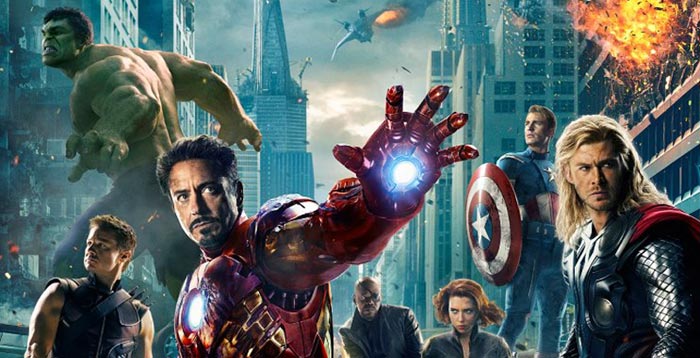
The Avengers (Joss Whedon, 2012) – 1,2,5,6
Misfits (Howard Overman, 2009 - ) – 1,2,3,4
Buffy the Vampire Slayer (1997 – 2003) – 1,2,4,5
X-Men (Bryan Singer, 2000) – 1,2,4,5
X-Men: First Class (Matthew Vaughn, 2011) – 1,2,4,5
Heroes (Tim Kring, 2006-2010) – 1,2,4,5
Griff the Invisible (Leon Ford, 2010) – 2,3,4
Kick-Ass (Matthew Vaughn, 2010) – 1,2,3,4,5
Tuesday, May 1, 2012
The Zombie World Around Us
1. Cardio
2. Double tap
3. Beware of bathrooms
4. Seatbelts
6. Cast iron skillet
7. Travel light
8. Get a kickass partner
12. Bounty paper towels
15. Bowling Ball
17. Don't be a hero (later, 'Be a Hero')
18. Limber up
21. Avoid strip clubs
22. When in doubt, know your way out
29. The buddy system
31. Check the back seat
32. Enjoy the little things
We know most of the rules of Zombieland. We also know the old rules of the zombie canon, e.g. you must destroy the head or the brain, and if you’re bitten, you’re dead. We also know recent films have sought to break some or all of those rules. But what are the rules of the Zombie Universe, the universally acknowledged truths that will make for the perfect zombie film?
1. The cause of the Zombie outbreak has to reflect contemporary fears
In the midst of the Cold War, the zombie outbreak came from space. In recent years fear of stem cell research and medical experimentation on animals has resulted in a global outbreak. In the modern age, our fear of infection (swine flu, avian flu, any kind of flu) informs the cause of the post-apocalyptic nightmare. The idea of zombies is ridiculous, but that it could happen from something relatively plausible such as an epidemic, or pandemic, or space junk falling to Earth makes for some uncomfortable viewing. And that’s what we’re striving for.
2. Individual survivors must band together to face the zombie hordes
In scenarios like a zombie apocalypse, it’s the most unlikely that survive. Recluses too afraid to leave the house, gun-toting rednecks bent on vengeance, geeks used to avoiding a beating at lunch every day, kids from broken homes used to managing on their own, coma patients who miss the apocalypse. This isn’t always a good fit when several people think they should be in charge and one or two don’t let anyone be in charge of them. We at home know that their best chance of survival is sticking together, but it takes them a while to realise. And usually one of them ends up being killed by someone in the group. Group tension is usually required somewhere in the middle, when the tension brought about by the survivors’ immediate need to survive wears off a little.
3. Zombies shouldn’t run
In recent years zombies have been working on their personal fitness and are now capable of sprinting toward their victims. But this seems counter to the deeper fears zombies play on, namely, Death. Slow, inevitable, ever-present death. You can avoid it for a while, but gradually it will creep up on you. And I’m not alone in this thinking. In 2008, Simon Pegg lamented the end of the slow-moving zombie in his article, ‘The Dead and the Quick,’. That they now move faster does serve a purpose, however, which leads to the next rule.
4. Zombies need to be scary all the time
This appears to be a no-brainer, pardon the pun. But after the initial shock of seeing the Undead and discovering they can be killed, people may start to think they can survive this apocalypse business. So you need to remind people that zombies are still terrifying reminders of a painful death. But how? Usually a group attack will do the trick, but this will become boring. Another trick is revealing the band of survivors’ current hideout is unsafe. One of the best ways to remind people that zombies are terrifying, however, is having their loved ones transformed into the living dead. There’s nothing more gruesome than being eaten by your own family.
5. Guns
You need ‘em. But you should also have a shovel, club, or crossbow on hand. Or even a toaster oven or vinyl collection. We’re normally nervous about guns, and zombie films often suggest that they do come in handy sometimes. Gun control is an issue in itself, but the primary goal of this element of the zombie film is to illustrate that the rules change when society breaks down and what we’re scared to admit to ourselves is that the first thing we’ll probably reach for in the event of a global zombie outbreak is some form of weapon.
The idea of genre is that it’s a way of telling a story in a particular way and using certain codes and conventions to address particular themes and affect the audience in a certain way. It’s an easily recognisable structure that informs the audience what it’s about before they see it so that they can decide whether or not they’ll enjoy it. The zombie genre is technically a sub-genre of the horror genre and as such, it’s a way in which filmmakers can address the fears that are held in contemporary society, and a chance for the audience to reflect on them and examine them.
If the aim is to remind an audience of the things they fear most, then the zombie film (like other all horror films) has to consistently scare the hell out of its audience. And how? By following the above rules. It’s all about visual storytelling and creating the tension that allows for a visceral reaction to the themes addressed within the film or television series.
The following films (and one television series) follow these rules relatively consistently and are thus my pick as the best of the subgenre that I’ve seen:
Night of the Living Dead (George A. Romero, 1968)
Dawn of the Dead (George A. Romero, 1978)
28 Days Later (Danny Boyle, 2002)
Shaun of the Dead (Edgar Wright, 2004)
The Walking Dead (Frank Darabont, 2010 - )
Though I love it dearly, I have left Zombieland (Rubin Fleischer, 2009) off this list purely because I don’t think it follows my rules perfectly and because it’s not scary. It totally wins everything else, because of Bill Murray’s cameo.
Thursday, March 22, 2012
Advice for teenage girls from someone whose name means 'Princess'


I attended a midnight screening of The Hunger Games and I must say I was disappointed with the turnout. I could get a ticket just hours before the screening. The cinema wasn’t even full. And I couldn’t help thinking that if it had been a Twilight screening it would have been sold out months ago. This makes me feel sick.
I think the Twilight franchise is evil and needs to be wiped out. Every print of every film, every DVD and Blu-Ray copy and especially every single copy of every single print of every book piled on a massive bonfire with an effigy of Bella Swan to set it all up in flames. I’m also fully aware this sounds hypocritical considering I’ve read all the books and watched all of the films so far. I’m contributing to its continued success. But I feel as a film lover it’s my duty to sacrifice my beliefs and watch/read these awful examples of feminine oppression at its most insidious in order to warn people. Often, people criticising a film or book have never even read or seen it and if so, how can they critically analyse the material and make an informed judgement about it? But yes, I did get sucked into the books and I did think the first film was not so bad. I mean, c’mon: directed by Catherine Hardwicke and it has Anna Kendricks in it. It wasn’t all bad.
But Twilight is bad. It’s the worst kind of message for teenage girls, because the ideology is so insidious that it was women participating in this idea that it’s beautiful and romantic to do nothing else with your life other than be a wife. And as a feminist I firmly believe women in the Women’s Liberation movement worked damn hard so that women could choose what they wanted to do with their own lives and bodies and if they wanted to be a wife and mother, well, heck, as long as that was their own choice then get on it. What makes me really angry about this series is that this choice doesn’t feel like a woman’s own choice. Bella Swan is supposed to be smart; she’s in an advanced Chemistry class when she meets Edward and she clearly loves classic literature. She’s also initially wary of marriage, because her parents split up when she was young. But after Edward won’t sleep with her unless she marries him, she somehow decides she wants to throw all of her hopes and dreams away (although, does she really have any?) so that she can be Edward’s wife for eternity. You can go to college AND get married now, ladies.
And the men she has the choice of are both horrible examples of mankind. One is moody, controlling, withholding, and threatens violence when Bella gets too close to him, or threatens suicide if she were to leave him. That’s a domestic abuse case, not a love story. Jacob, meanwhile, becomes almost a sexual predator, refusing to leave Bella alone despite her insistence that she is uninterested. Not only that, he too threatens violence when he disagrees with her choice to first marry Edward, then to want to sleep with him. He also threatens to kill Edward continually. When she is pregnant (How?!?!?) and sick, the two men plan Bella’s future without even consulting her. Why on Earth would any right-thinking woman choose men like that in their life? Yet these books and films encourage us to choose between them. Hmm, let’s see; an abuser or a sexual predator? Oh, I can totally understand Bella’s predicament now!
There are maybe three decent men in the whole series and none of them are really rewarded for this effort. Sure, one of them is Bella’s own father, but this is surely the one time when it’s ok to want to marry someone more like your father. But even then, in the books when Bella moves in with her father she starts taking care of him and he stops looking after himself, leaving it all to her.
The message of this book, thinly-veiled behind these mystical elements of vampires and werewolves (the tamest you will ever see), is that the most beautiful thing a woman can be is a wife and mother. Yes, those are admirable if that’s what you’re into, but you shouldn’t be telling women that’s all they are capable of. Bull. Fucking. Shit. What really makes me sick is that this series is written by a woman. And it’s been read, discussed and loved by women. I’ve overheard middle-aged women discussing whether they are Team Edward or Team Jacob.
The other thing that really upsets me is the way in which the books draw you into relating to Bella. The first-person narration is always an effective device for empathising and connecting with a character. But when the character is average all over, it’s easy to see how girls will feel like Bella’s story is their story. She’s also the most passive protagonist in modern literature. In the fourth book she hardly even moves. No wonder the film was doomed to be the most boring piece of shit in history when you have that to work with, and even if Kristen Stewart was the world’s greatest actress (FYI: she’s not), how would such a strongly-opinionated young women ever be able to understand this character, let alone inject any sympathy or even life into her.
This brings me back to The Hunger Games. There are some ever so slightly similar themes at work in Suzanne Collins’ novel. It’s the story of a young woman told in first-person narration and the most important thing to her is protecting her family. She also becomes involved in a love triangle. But here is where the similarities end. Thank fuck. Because Katniss Everdeen is nothing like Bella Swan. She is strong and she is active. From the first page of The Hunger Games, Katniss is actively keeping her family together. Not only that, but she is willing to fight dirty to do this. And her love triangle involves her with two boys who are smart and cunning themselves. Her childhood friend Gale is a skilled hunter like Katniss and openly criticises the Capital. Peeta too is talented and strong and he knows how to manipulate people in order to survive. He’s honest about his feelings for Katniss and tells her so, but not without affecting her personal safety. Instead, he uses it to help save her life.
But perhaps I’m getting ahead of myself. For those unfamiliar with the books or film adaptation released in Australia today, the story is this. In a futuristic wasteland we can only assume is the former United States of America, the Capital city of Panem rules the remainder of the country, now divided into 12 districts. After years of war, rebellions, uprising and the annihilation of District 13, the Capital now keeps the rest of the country in line in several brutal ways. The most brutal is the annual televised known as The Hunger Games. On the Reaping Day each year, a girl and boy aged 12-18 is picked at random to compete. For wealthy districts it’s an honour they train for their whole lives. For poorer districts it is a death sentence. It’s not just your run-of-the-mill athletic competition. They wish. The Hunger Games is a televised battle royale in which 24 young boys and girls must kill one another to win. Only one will come out. It’s both punishment and a sign of good faith, according to the Capital. Punishment for the Rebellion and a sign of the Capital’s continued generosity in letting at least one kid live every year. The sickest part is that much like the film Series 7: The Contenders, it’s a reality television series and every move the contestants or Tributes make is broadcast to the entire country. Bets are placed on Tributes, and people recount their favourite moments and talk about where they were when a particular Tribute was killed.
Now in its 74th year, Katniss and her sister Primrose are both potential tributes, Prim having just turned 12. Katniss is not worried about Prim as she knows her name is only in the ballot once. In exchange for rations, families can choose to put their child’s name in the ballot multiple times and Gale’s name is in there 43 times. Katniss herself has multiple entries. But, because this is a drama and things have to happen, y’all, the unthinkable does happen and Katniss hears the name Primrose Everdeen called as the girl Tribute for District 12. To save her sister she does what no poor district ever does; she volunteers as a Tribute in her sister’s place. The rules now seem to have changed and Katniss is viewed as a credible contestant. When baker’s son Peeta Mellark is chosen as the male tribute, it seems that District 12 may actually have a chance.
Already there is more excitement and more serious political themes at play here than in Twilight. Having only read the first book in the series, the second being Catching Fire and the third, Mockingjay, I think this book and subsequent film gives teenage girls a much better role model to aspire to. Katniss is almost always in control of her own destiny. She is at first disbelieving that she has a chance, but the thought of her sister being alone spurs her on. She knows she’s excellent with a bow and arrow and proves herself. She’s also unwilling to change her personality until it becomes crucial to her survival. When Peeta uses his crush on her as a survival tactic for the two of them, she plays along. There are no discussions in which Peeta and Gale decide which one should have Katniss; she chooses. In the first book and film, she is unsure she wants either of them.
One girl dressed up as Katniss at the screening and though it’s probably a little lame, I really hope that more girls dress up as Katniss in the future.
Labels:
Stephenie Meyer,
Suzanne Collins,
The Hunger Games,
Twilight
Wednesday, March 21, 2012
Better the Devil you know
The House of the Devil (2009)
Directed by: Ti West
Written by: Ti West
Starring: Jocelin Donahue, Greta Gerwig, Tom Noonan, Mary Woronov
Warning: Spoilers
Second warning: Spoilers won’t make you less scared if you watch the film after reading this.
As the film’s opening titles suggest, the 1980s were filled with ‘Satanic panic,’ regarding demonic possession and the idea of the Devil’s presence in the real world. According to the film, the events that transpire in the next 98 minutes are based on actual events.
But don’t be fooled: these credits, rather than a warning of a chilling recreation of history, are merely the start of an expertly handled period horror film. More than a pastiche, parody, homage, or satire, The House of the Devil is a film that may as well have been buried in someone’s garage until three years ago. According to West himself, the film is set in 1983, but the real feat is that it looks like it was made in 1983.
The plot is this: college sophomore Samantha (Donahue) needs money to pay rent for her new apartment. She takes on a babysitting job in an isolated part of town on the night of a full lunar eclipse. When she arrives at the house accompanied by her best friend Megan (Gerwig), her employer Mr Ulman reveals that it’s not a babysitting job at all but actually involves looking after his elderly mother.-in-law. After demanding a higher wage, Samantha agrees to stay. Megan leaves with a promise to return later to pick her up. And that’s when shit gets cray.
The film was shot using 16mm film, a popular film stock used in the 1980s and uses filming techniques used in 1980s horror films, zooming on actors and using freeze-frames and 1970s/1980s opening credits and end credits. The set design and costume is spot-on, down to the Coke cups at the pizzeria to Samantha’s Sony Walkman (purchased on Ebay). The themes too are in keeping with horror films of the time, utilising mystical elements seen in slashers like The Texas Chainsaw Massacre (the Full Moon) and themes of demonic possession and evil houses, seen in films like The Exorcist and The Amityville Horror.
West is meticulous in creating a film that perfectly reflects what may be considered the Golden Age of horror, but what is also admirable is the contemporary flair given to the story and a Generation-Y understanding that while these films are classic blueprints for the films that would follow, they don’t necessarily still deliver the chills they once did.
Rather than going straight for gore and horror, West instead sets up a story filled with a growing sense of unease, creating a film that goes for a sustained sense of terror. While it's a classic Hitchcockian move, it seems a relatively recent trend in horror.
The initial story is one many audience goers would easily sympathise with. Samantha’s college dorm-mate is a nightmare and she needs to get out. When she finds a nice apartment, she realises she will struggle financially to remain there. That this leads her to the basement of a family of Satan-worshipping psychos feels more realistic and more organic than other horror films and especially ones made in the 1970s and 1980s. We don’t want her to stay but some of us will understand why. Megan, who has a rich father, cannot understand why Samantha chooses to stay and so is upset with her. But what she doesn’t understand is that desperation for money, one that is not about being able to afford a designer dress, but one that is about keeping a roof above your head. Not only that, but Samantha is more sensitive than Megan, and feels pity for Mr Ulman and his predicament. He’s a sympathetic character despite giving nothing away and giving Samantha no real assurance that he is trustworthy.
This idea is also explored in Fincher’s version of The Girl with the Dragon Tattoo. When serial killer Martin Vanger traps journalist Mikael Blomkvist in his basement he explains that the reason he is there is not because Vanger overpowered him but because he stayed in the house despite his better judgement so as not to offend Vanger or put him offside, remarking that this is how he lured his other victims. So too in The House of the Devil does Samantha stay despite her better judgement. The idea of leaving and feeling safe is not nearly as satisfying as taking $400 home with her after one night’s work.
That the most horrifying events happen so late in the film makes it more shocking as well, particularly as you’ve come to identify with the characters and actually want them to survive, an element often absent from slasher films of the 1980s. When Megan’s head is blown away by a stranger who turns out to be the son of the crazy Ulmans, it’s shocking not only because of the suddenness of the murder but because we’ve gotten to know her. Where thrillers often set up likeable characters to create tension when they are threatened, often horror films rely merely on the shock of a character being suddenly and violently murdered and here West strikes a balance between shocking violence and character development.
The concept of an evil house, or killer’s lair being found in the basement or attic of a house is definitely not new and that’s the point; in the 1970s and 1980s, when the rules were still being written, heroines frequently stayed in a creepy house too long, or ventured down to a dank basement to find her worst nightmares realised. That the house itself is not particularly frightening adds to the horror later, when Samantha discovers the people she is working for are not the real owners of the house. But before that discovery is an extended period in which Samantha explores the home alone.
Knowing that her friend has been brutally murdered, the audience watches her with a rising sense of unease, waiting for a hand to grab her, or an unlocked door to lead to the horrors that we are now convinced await her from somewhere within. That this does not happen until the end of the film makes it all the more disturbing. The film’s final sequence in which Samantha is impregnated with the spawn of Satan is made all the more horrific for the initial building of tension; the façade of domestic drama or subtle thriller falls away to reveal the real film underneath. This is what everyone was afraid was going on in basements around the US in the 1980s: Satanic cults abusing young women in some psychotic belief that they were bringing about Hell on Earth and the return of their master. Samantha’s attack symbolises that the rules have now changed.
With Samantha’s escape comes more violence, more gore and more blood. That she systematically annihilates her attackers feels cheap, almost too easy. She hasn’t really proven her worth as a strong heroine. But it’s not until the film’s final moments that you realise it has been pointless. The terror initially brought about from wondering how she will survive is now a feeling of terror precisely because she survives, as the final scene reveals she is pregnant with the spawn of Satan. The psychotic Ulmans have won after all. This recalls the final chilling moments of Rosemary’s Baby. We're hopeful that she will survive and the child will be destroyed. But instead, we see Rosemary’s maternal instincts kick in and we know it is too late for her. The film's final shot of Samantha recovering from her self-inflicted gunshot wound to head, having just heard that she and her unborn child are safe, is just as chilling.
Ti West’s thorough knowledge of the horror genre and its historical development means that he has not only created a brilliantly realised reflexive genre piece but also a chilling horror film that perfectly recreates the terror those iconic horror films would have produced in their heyday.
Wednesday, August 24, 2011
Novel Idea
I've been thinking lately of amazing books I've read that either haven't been subjected to a film adaptation or haven't been subjected to a decent one. With that in mind, I bring you my picks for awesome books what should be awesome movies by now.
The Amazing Adventures of Kavalier and Clay by Michael Chabon
Name-checked by early 2000s cool guy Seth Cohen and even by one of my Honours course coordinators, this story of cousins who almost singlehandedly revolutionise the comic book industry in New York before, during and after World War II is just begging for life on the silver screen, not least because of the novel's interest in the image and popular culture.
Plot: Josef Kavalier escapes Prague in 1939 and comes to live with his cousin, Sammy Klayman, in Brooklyn. Joe, a talented artist and Sam, a would-be writer, together create a comic book series called The Escapist. Riding a wave of success during the golden age of the comic book, each boy battles their own demons; Joe becomes frustrated with his attempts to rescue his family still in Prague while falling in love with New York, not to mention artist Rosa Saks, and Sam struggles with his lack of literary success while questioning his sexual identity. The pair part ways and 11 years later, we find Sam and Rosa married with a son, Tommy, who has been receiving instruction in magic and escapology from Joe in secret, who is now hiding out in his and Sammy's old office in the Empire State Building. The cousins are eventually reunited through the inescapable bonds of family, love and religion.
Why it's perfect for an adaptation: regarded as one of the best novels of the 21st Century, a film version would definitely pull an audience. It deals with some themes Hollywood has long been interested in, fusing the comic book film, war films and the Holocaust film, not to mention that it also includes the enduring nature of true love. It also has a real sense of time and location, and to quote an oft-cited cliché, the city of New York is almost as central a character as Kavalier and Clay themselves. It also serves as a love letter to that which both comic books and Hollywood cinema trade on: the idea of escapism. There's a beautiful passage toward the end of the book that explains the importance of having an outlet to escape the struggles of the real world. The sky's the limit in terms of a visual style – recreating the world of Kavalier and Clay could both rely on the beautiful comic books they produce and their influences, most notably Orson Welles with Citizen Kane.
Why it hasn't already been made: Don't bother asking why I'm the first person to think it would make an awesome film, because I'm not. The project is currently described on Wikipedia as being in 'development hell,' and it has a hauntingly empty entry on IMDB, with four question marks in place of a year of release. The story goes that Scott Rudin had been involved in the production of the film adaptation for a long time with Chabon adapting the screenplay himself. Creative differences occurred between him and Chabon, namely, that Chabon seemed to Rudin to be butchering his own work, leaving out what he considered to be crucial scenes. Since then, the project has been picked up and put back down again for a while, the last time it looked like it had a serious greenlight being apparently in 2007.
Not only that, but Chabon himself feels that the novel's structure doesn't lend itself easily to the 3 act structure of film. The novel spans quite a number of years and odd locations, and there is indeed a gap of eleven years around the middle of what is a very long story. The story's length and structure may indeed make it difficult – in any case the film would be very long. The issue is, would it outstay its welcome or would it feel like too short a stay in Chabon and co.'s company?
Cast and Crew: It's no easy task, crewing a hypothetical project when I have little to no industry insight. But I'm not going to let that stop me putting my two cents in.
Screenwriter
Chabon himself has remained as screenwriter on the proposed project. Having the writer adapt the novel for the screen is definitely an advantage, but is he too close to the work? He also works within a completely different medium and a different structure, format, etc.
He has said that he has struggled to adapt his own work – maybe a fresh start with a new screenwriter on board may help this baby along. The book's snappy dialogue and flair may lend itself to an Aaron Sorkin, perhaps? In any case, this requires careful handling and a large dose of 'directing from the page.'
Director of Photography
It's a pity that Gregg Toland's dead. He would have been perfect.
Robert Richardson could definitely give the film a polished, stylised look, having photographed The Aviator for Martin Scorsese and producing an even more highly stylised and breathtaking, shall we say parallel 1940s, in Tarantino's Inglourias Basterds. Anyone with a respect for the classical Hollywood style and particular ease with low-key lighting, deep focus and understanding of the importance of depth of field would nail it. So...Gregg Toland, then.
Director
Matthew Vaughn, hands down. He's adapted fantasy novels with ease (Stardust), and has mastered not one but two successful comic book films; Kick-Ass and X-Men: First Class. He can handle effects-driven material as well as more character-driven work and while his background is clearly in action and crime films, he can still find the emotional core of any story. He'd be able to navigate location filming and if required he would be comfortable with using computer animation for particular setpieces (the ruins of the World's Fair, the Empire State Building interiors and Joe's stunt on the roof). He's worked with some remarkable actors including Michael Gambon and Mark Strong and the inclusion of a scene in which an eleven year old girl drops the C-bomb while brutally killing gangsters and criminals in Kick-Ass means he won't shy away from some of the novel's more difficult moments.
Main Cast
Josef Kavalier
Ben Whishaw. He's got the haunted, penetrating eyes of someone who's been through some serious shit, and a European look that seems perfect for Joe. His public persona seems to exude Joe's quiet resolve and supreme intellect. Plus, he's got eyes you could just dive into – exactly how I imagine Mr Kavalier.
Sam Clay
Any big-screen version of the ambitious Sam Clay needs to crack wise like a Jonah Hill, but handle the more serious subject matter of the search for his sexual identity like a Jesse Eisenberg. Eisenberg wins for two reasons: he's fresh from Academy attention, and I have a massive crush on him and would cast him in every single film ever if I could.
Rosa Saks
Previous incarnations of the project have put Natalie Portman in the role, most likely because she's an incredible actress and might jump at the chance to play the gal in this scalene love triangle. As much as I love and respect her, to me she looks completely wrong for the role. My choice would be Alia Shawkat. She's proved she's got the attitude required to play Rosa and the figure to boot.
Tracy Bacon
Ryan Gosling. He's gorgeous, he could easily play the quintessential 1940s Hollywood hero with a career-destroying secret, and did I mention he is absolutely gorgeous?
We'll sort out silly logistics like age, chemistry and casting young and old versions of the characters vs makin them older or younger digitally later.
My only hope is that The Amazing Adventures of Kavalier and Clay leaves development hell and ascends to box office heaven. Of course I would like to be consulted on my ideas for the project as outlined above (and I feel sure I will. Ahem.), but in the end, all I'd like from any filmmaker who takes it onboard is that they make the film as a spectacular thank you letter to this amazing book. Chabon and company, let's get on this!
Coming soon: Lord Arthur Savile's Crime by Oscar Wilde, The Beautiful and Damned by F. Scott Fitzgerald and The Kill by Emil Zola.
The Amazing Adventures of Kavalier and Clay by Michael Chabon
Name-checked by early 2000s cool guy Seth Cohen and even by one of my Honours course coordinators, this story of cousins who almost singlehandedly revolutionise the comic book industry in New York before, during and after World War II is just begging for life on the silver screen, not least because of the novel's interest in the image and popular culture.
Plot: Josef Kavalier escapes Prague in 1939 and comes to live with his cousin, Sammy Klayman, in Brooklyn. Joe, a talented artist and Sam, a would-be writer, together create a comic book series called The Escapist. Riding a wave of success during the golden age of the comic book, each boy battles their own demons; Joe becomes frustrated with his attempts to rescue his family still in Prague while falling in love with New York, not to mention artist Rosa Saks, and Sam struggles with his lack of literary success while questioning his sexual identity. The pair part ways and 11 years later, we find Sam and Rosa married with a son, Tommy, who has been receiving instruction in magic and escapology from Joe in secret, who is now hiding out in his and Sammy's old office in the Empire State Building. The cousins are eventually reunited through the inescapable bonds of family, love and religion.
Why it's perfect for an adaptation: regarded as one of the best novels of the 21st Century, a film version would definitely pull an audience. It deals with some themes Hollywood has long been interested in, fusing the comic book film, war films and the Holocaust film, not to mention that it also includes the enduring nature of true love. It also has a real sense of time and location, and to quote an oft-cited cliché, the city of New York is almost as central a character as Kavalier and Clay themselves. It also serves as a love letter to that which both comic books and Hollywood cinema trade on: the idea of escapism. There's a beautiful passage toward the end of the book that explains the importance of having an outlet to escape the struggles of the real world. The sky's the limit in terms of a visual style – recreating the world of Kavalier and Clay could both rely on the beautiful comic books they produce and their influences, most notably Orson Welles with Citizen Kane.
Why it hasn't already been made: Don't bother asking why I'm the first person to think it would make an awesome film, because I'm not. The project is currently described on Wikipedia as being in 'development hell,' and it has a hauntingly empty entry on IMDB, with four question marks in place of a year of release. The story goes that Scott Rudin had been involved in the production of the film adaptation for a long time with Chabon adapting the screenplay himself. Creative differences occurred between him and Chabon, namely, that Chabon seemed to Rudin to be butchering his own work, leaving out what he considered to be crucial scenes. Since then, the project has been picked up and put back down again for a while, the last time it looked like it had a serious greenlight being apparently in 2007.
Not only that, but Chabon himself feels that the novel's structure doesn't lend itself easily to the 3 act structure of film. The novel spans quite a number of years and odd locations, and there is indeed a gap of eleven years around the middle of what is a very long story. The story's length and structure may indeed make it difficult – in any case the film would be very long. The issue is, would it outstay its welcome or would it feel like too short a stay in Chabon and co.'s company?
Cast and Crew: It's no easy task, crewing a hypothetical project when I have little to no industry insight. But I'm not going to let that stop me putting my two cents in.
Screenwriter
Chabon himself has remained as screenwriter on the proposed project. Having the writer adapt the novel for the screen is definitely an advantage, but is he too close to the work? He also works within a completely different medium and a different structure, format, etc.
He has said that he has struggled to adapt his own work – maybe a fresh start with a new screenwriter on board may help this baby along. The book's snappy dialogue and flair may lend itself to an Aaron Sorkin, perhaps? In any case, this requires careful handling and a large dose of 'directing from the page.'
Director of Photography
It's a pity that Gregg Toland's dead. He would have been perfect.
Robert Richardson could definitely give the film a polished, stylised look, having photographed The Aviator for Martin Scorsese and producing an even more highly stylised and breathtaking, shall we say parallel 1940s, in Tarantino's Inglourias Basterds. Anyone with a respect for the classical Hollywood style and particular ease with low-key lighting, deep focus and understanding of the importance of depth of field would nail it. So...Gregg Toland, then.
Director
Matthew Vaughn, hands down. He's adapted fantasy novels with ease (Stardust), and has mastered not one but two successful comic book films; Kick-Ass and X-Men: First Class. He can handle effects-driven material as well as more character-driven work and while his background is clearly in action and crime films, he can still find the emotional core of any story. He'd be able to navigate location filming and if required he would be comfortable with using computer animation for particular setpieces (the ruins of the World's Fair, the Empire State Building interiors and Joe's stunt on the roof). He's worked with some remarkable actors including Michael Gambon and Mark Strong and the inclusion of a scene in which an eleven year old girl drops the C-bomb while brutally killing gangsters and criminals in Kick-Ass means he won't shy away from some of the novel's more difficult moments.
Main Cast
Josef Kavalier
Ben Whishaw. He's got the haunted, penetrating eyes of someone who's been through some serious shit, and a European look that seems perfect for Joe. His public persona seems to exude Joe's quiet resolve and supreme intellect. Plus, he's got eyes you could just dive into – exactly how I imagine Mr Kavalier.
Sam Clay
Any big-screen version of the ambitious Sam Clay needs to crack wise like a Jonah Hill, but handle the more serious subject matter of the search for his sexual identity like a Jesse Eisenberg. Eisenberg wins for two reasons: he's fresh from Academy attention, and I have a massive crush on him and would cast him in every single film ever if I could.
Rosa Saks
Previous incarnations of the project have put Natalie Portman in the role, most likely because she's an incredible actress and might jump at the chance to play the gal in this scalene love triangle. As much as I love and respect her, to me she looks completely wrong for the role. My choice would be Alia Shawkat. She's proved she's got the attitude required to play Rosa and the figure to boot.
Tracy Bacon
Ryan Gosling. He's gorgeous, he could easily play the quintessential 1940s Hollywood hero with a career-destroying secret, and did I mention he is absolutely gorgeous?
We'll sort out silly logistics like age, chemistry and casting young and old versions of the characters vs makin them older or younger digitally later.
My only hope is that The Amazing Adventures of Kavalier and Clay leaves development hell and ascends to box office heaven. Of course I would like to be consulted on my ideas for the project as outlined above (and I feel sure I will. Ahem.), but in the end, all I'd like from any filmmaker who takes it onboard is that they make the film as a spectacular thank you letter to this amazing book. Chabon and company, let's get on this!
Coming soon: Lord Arthur Savile's Crime by Oscar Wilde, The Beautiful and Damned by F. Scott Fitzgerald and The Kill by Emil Zola.
Tuesday, August 2, 2011
The New Auteurs
"There are no good and bad movies, only good and bad directors"
-- Francois Truffaut
Whether you're making films or thinking critically about them, a theory foundational to thinking about film is the auteur theory. Though many have tried to reject this theory, it persists, mostly because it's one of the first ways in which to analyse a film.
In essence, the idea behind auteur theory is this; that a director can use the commercial apparatus of filmmaking in the same way that a writer uses a pen or a painter uses paint and a paintbrush. It is a medium for the personal artistic expression of the director. It's really a tool for analysing how strong a director's voice is in their films. While Truffaut and company were talking about this idea as a means of defending Hollywood cinema and director Alfred Hitchcock in particular, the theory is a means of exploring recurring themes within works directed by the same person.
While modern theorists will suggest it's basically bollocks and directors like Michael Winterbottom actively reject the idea, it's hard to ignore directors with a particular style or approach, or a concern that is developed throughout several films. And if this theory is one of the first concepts taught to young filmmakers and critics alike, what better place to look for auteurs than film students?
I was lucky to do a student exchange at Manchester Metropolitan University in 2009 and work with the filmmakers featured below. It's a program that to me really represents the ideal way to explore filmmaking; the perfect combination of theory and practice.
The following films are perfect examples of the kind of work that you can produce as a student (I never did, but that's a story for another time), and these filmmakers reveal another dimension to Andre Bazin's thesis that the auteur theory was a way of choosing the personal factor in artistic creation as a standard of referencce, and then assuming that it continues and even progresses from one film to the next.
Lift Him Up (Hayley Stuart, 2011)

This beautifully photographed film is the story of a young man trapped by family obligation. His father is a minister who preaches from their home, and his sister seems a devoted follower. At the film's end, escape is possibly only symbolically; he frees a horse tied up in a local paddock. The neutral, wintry colour palette reveals a subdued and heartbreaking picture of adolescence and the seemingly impossible notion of freedom. Shots often reveal the protagonist, Joe, moving toward the edges of the frame; when he is in the centre of the frame he is at his most uncomfortable, the yearning for freedom evident in the very mise-en-scene. The film's title, the name of a hymn, harks back to the theme of religion, used here to subvert the notion of religious devotion as an uplifting experience. The protagonist is the opposite, weighed down by the oppressive religion his father practises. The film ends with the release of the horse, and the audience is left to speculate on whether Joe will free himself as well. The story and themes are perfectly executed at the visual, performative and aural level – a flawless exploration of religion, freedom, family pressure, and adolescence.

The film is powerful, moving and emotionally engaging, and its themes of family obligation and shifting dynamics can be seen in Hayley's other work at MMU. In films like He Rains On My Insides (2009), she explores family relationships and the factors that complicate them. Using a non-linear approach, the film reveals the reversal of roles between a father and daughter whose relationship is affected by alcoholism. In Of Education (2010), family obligation is explored through a young boy and his friendship with an elderly lady. Their relationship is strenghthened through music, which the boy then uses to connect with his mother. All of these films are full of stunning shots and a minimalistic approach to dialogue. Hayley also emphasises her protagonists' feeling of alienation and disconnection, often placing them directly in the middle of a vast landscape; Joe freeing his horse but not himself in Lift Him Up, the young boy in Of Education lying flat in the middle of a deserted stretch of road waiting for a change, Charlotte pushing her bike through the park she used to ride in with her father in He Rains On My Insides. With all of Hayley's films is a definite sense that every single shot, line of dialogue, movement, costume, every sound serves only the narrative; this is what every filmmaker must strive for in order to truly engage with the audience.

You can watch all of Hayley's amazing student films here
Things Beyond The Sun (Claire Molloy, 2011)
This film opens on a vast landscape, and just visible in the distance is a little girl who believes this is a place of magic and wonder. On one level, Things Beyond The Sun is a tale of friendship: a little girl barges into an old man's house looking for treasure and between the two of them they discover that meeting someone new can lead to new possibilities. But this film is about light and dark, childhood innocence and the loneliness of old age. Drawing on influences such as Guillermo Del Toro's Pan's Labyrinth (2006), Claire uses the contrast of the sunny landscape that belongs to the world of the little girl and the dark, depressing, almost dangerous interior of the old man's world to reveal a perspective on life often lost in the transition to adulthood. POV shots of the little girl reveal glimpses into her world, along with abstract sound editing and design, and the use of surreal close-ups that serve the juxtaposition of image and sound, fantasy and reality, youth and old age. By the film's end, the old man has literally entered her world through a secret door. He may not have gone very far, but he may now see things the way the little girl can.
Claire's work reveals an interest in childhood, exploring the notions of childhood innocence and growing up through use of the fantasy genre rather than using realism. In A Summer Long Since Passed (2010), the transition from childhood to adulthood is presented as a dark fairytale about the painful yet necessary process of growing up. References to dark fairytales such as Snow White are evident in Claire's use of white, black and red, and the use of the apple – the symbolic loss of childhood (and feminine) innocence. Shots from within the little girl's bedroom in the framing story recall Sofia Coppola's The Virgin Suicides (1999), an exploration of youth, femininity and innocence lost. She also seems to take inspiration from Peter Weir, with the landscape of the fairytale recalling the dreamlike scenes of femininity and nature from Picnic At Hanging Rock (1975).
While not related to childhood, but very much still an interest in the darker edges of fantasy, All My Colours (2009) represents another way in which Claire's work challenges the conventions of realism. All My Colours presents a lover's quarrel and takes it to very dark conclusions. An argument is repeated from three different perspectives and takes three different paths. Claire uses stylised dialogue and editing, giving the film a noir-ish edge. She also saturates the film in different washes; red, green, blue, and white, the title becoming a cue to the visual expression of the conflicting emotions within each lover.
You can watch Claire's challenging and whimsical student films here
Pace (Sioned Page, 2011)
Michelle Strozykowski defines Social Realism as “representative of real life, with all its difficulties. The stories and people portrayed are everyday characters, usually from working class backgrounds. Typically, films within the social realist canon are gritty, urban dramas about the struggle to survive the daily grind.” Social Realism in British Film: Where Did the Kitchen Sink Drama Emerge From? | Suite101.com http://www.suite101.com/content/social-realism-in-british-film-a39973#ixzz1TrIUTfKq
Sioned's film Pace represents a more modern approach to the genre, an approach that reflects a personal stake in the story presented onscreen. If Social Realism is characterised by its gritty representatation of real life, Sioned uses vivid cinematography to emphasise that social realism need not resort to a subdued visual manifestation of the subdued subject matter. Pace is a family drama about a family dealing with their mother's terminal illness. Through the use of colour, sparing use of dialogue, subtle humour, and a focus on the experience of the children, Sioned is able to capture the nature of family grief and tragedy that is more realistic, and more personal, than mainstream depictions of family tragedy.
In this film and others such as I, Personally (2009), an experimental film about motherhood, Sioned reveals an interest in exploring family dynamics, particularly what it means to be a daughter and what it means to be a mother. Her skill as an editor and cinematographer is particularly strong in this film, using the natural environment as her colour palette. It's a skill that translates beautifully to Pace, creating a link between the natural cycles of life and death and connecting it to a human undershttp://www.blogger.com/img/blank.giftanding of them. Her work reveals a developing, sophisticated and intelligent interest in exploring family, grief and identity.
You can watch Sioned's beautiful student films here
Far From Home (Sophie Broadgate, 2011)

The science fiction genre is generally considered as a site rich for critical analysis of contemporary society. Modern genre films often seek to actively adhere to long-established conventions or fuse them with another set of generic conventions, allowing for a deeper exploration of genre. Sophie's film reflects the blending of science fiction with Social Realism but also reveals a trend in modern science fiction, one that reveals the future as a barren wasteland. From films like Ridley Scott's Alien in 1979 to last year's sci-fi teen drama Tomorrow, When the War Began, modern science fiction reveals a concern that humanity's actions today are leading to future apocalypse. In Sophie's film, alien life has all but destroyed human life, and caught within this wasteland are two small boys. What is most impressive in this film is Sophie's incredibly effective use of special effects, her controlled use of sound and her ability to effectively handle the difficult task of portraying an exploration of the concept of home with all the longing associated with it in a family drama set in a post-apocalyptic landscape. Not only this, but these complex dimensions to this film are brought to life in such an economic way. Relying almost solely on visual cues, Sophie presents two children in the midst of a loss of innocence. Whether they will ever get back to the life they once had seems impossible. The last image reminds us that the concept of home may be imaginary, making for uncomfortable yet powerful viewing.

Sophie's interest seems to lie in exploring the stark reality and dark side of humanity, seen in her film Domino Effect (2010), and the possibility of endless worlds beyond dreary modern life in The Way Forward (2009), a beautifully photographed film about a man who discovers a portal to a vast landscape in a bathroom cubicle. Far From Home seems to be the perfect combination of the two; the harsh struggles we face in our modern life and the possibility that it's not the only one we have.

You can watch Sophie's impressive student films here
Barthes said the death of the author is the birth of the reader, which many seem to think means that thinking critically about art necessarily means banishing the search for the author's voice, or that we must reject any personal input the author may have in the work. But Foucault argues, and I think I agree (unless I've gravely mistaken his writing), that this is not the case. The search for a critical understanding of the text can start from an analysis of the context in which it was made, and thinking about the author's particular slant on their society and the way in which they choose to express it through their chosen medium seems to me absolutely vital.
Not only that, but those who reject auteur theory reject the idea that a sole vision or voice can be maintained through not one but multiple films. In the case of the filmmakers mentioned above, the voice is unmistakeably that of the director. Not only because of a strong sense of the language and possibilities of the cinema and the narrative they are exploring, but because by neccessity a student film involves taking multiple roles. Hayley, Claire, Sioned, and Sophie are allowed a level of control not always available to filmmakers; they are writers, editors, producers, and directors of photography. They all have strong, clear, loud voices as filmmakers and I cannot wait to see the work they'll go on to produce. And hey, maybe I can involved. I'll make the tea.
-- Francois Truffaut
Whether you're making films or thinking critically about them, a theory foundational to thinking about film is the auteur theory. Though many have tried to reject this theory, it persists, mostly because it's one of the first ways in which to analyse a film.
In essence, the idea behind auteur theory is this; that a director can use the commercial apparatus of filmmaking in the same way that a writer uses a pen or a painter uses paint and a paintbrush. It is a medium for the personal artistic expression of the director. It's really a tool for analysing how strong a director's voice is in their films. While Truffaut and company were talking about this idea as a means of defending Hollywood cinema and director Alfred Hitchcock in particular, the theory is a means of exploring recurring themes within works directed by the same person.
While modern theorists will suggest it's basically bollocks and directors like Michael Winterbottom actively reject the idea, it's hard to ignore directors with a particular style or approach, or a concern that is developed throughout several films. And if this theory is one of the first concepts taught to young filmmakers and critics alike, what better place to look for auteurs than film students?
I was lucky to do a student exchange at Manchester Metropolitan University in 2009 and work with the filmmakers featured below. It's a program that to me really represents the ideal way to explore filmmaking; the perfect combination of theory and practice.
The following films are perfect examples of the kind of work that you can produce as a student (I never did, but that's a story for another time), and these filmmakers reveal another dimension to Andre Bazin's thesis that the auteur theory was a way of choosing the personal factor in artistic creation as a standard of referencce, and then assuming that it continues and even progresses from one film to the next.
Lift Him Up (Hayley Stuart, 2011)
This beautifully photographed film is the story of a young man trapped by family obligation. His father is a minister who preaches from their home, and his sister seems a devoted follower. At the film's end, escape is possibly only symbolically; he frees a horse tied up in a local paddock. The neutral, wintry colour palette reveals a subdued and heartbreaking picture of adolescence and the seemingly impossible notion of freedom. Shots often reveal the protagonist, Joe, moving toward the edges of the frame; when he is in the centre of the frame he is at his most uncomfortable, the yearning for freedom evident in the very mise-en-scene. The film's title, the name of a hymn, harks back to the theme of religion, used here to subvert the notion of religious devotion as an uplifting experience. The protagonist is the opposite, weighed down by the oppressive religion his father practises. The film ends with the release of the horse, and the audience is left to speculate on whether Joe will free himself as well. The story and themes are perfectly executed at the visual, performative and aural level – a flawless exploration of religion, freedom, family pressure, and adolescence.
The film is powerful, moving and emotionally engaging, and its themes of family obligation and shifting dynamics can be seen in Hayley's other work at MMU. In films like He Rains On My Insides (2009), she explores family relationships and the factors that complicate them. Using a non-linear approach, the film reveals the reversal of roles between a father and daughter whose relationship is affected by alcoholism. In Of Education (2010), family obligation is explored through a young boy and his friendship with an elderly lady. Their relationship is strenghthened through music, which the boy then uses to connect with his mother. All of these films are full of stunning shots and a minimalistic approach to dialogue. Hayley also emphasises her protagonists' feeling of alienation and disconnection, often placing them directly in the middle of a vast landscape; Joe freeing his horse but not himself in Lift Him Up, the young boy in Of Education lying flat in the middle of a deserted stretch of road waiting for a change, Charlotte pushing her bike through the park she used to ride in with her father in He Rains On My Insides. With all of Hayley's films is a definite sense that every single shot, line of dialogue, movement, costume, every sound serves only the narrative; this is what every filmmaker must strive for in order to truly engage with the audience.
You can watch all of Hayley's amazing student films here
Things Beyond The Sun (Claire Molloy, 2011)
This film opens on a vast landscape, and just visible in the distance is a little girl who believes this is a place of magic and wonder. On one level, Things Beyond The Sun is a tale of friendship: a little girl barges into an old man's house looking for treasure and between the two of them they discover that meeting someone new can lead to new possibilities. But this film is about light and dark, childhood innocence and the loneliness of old age. Drawing on influences such as Guillermo Del Toro's Pan's Labyrinth (2006), Claire uses the contrast of the sunny landscape that belongs to the world of the little girl and the dark, depressing, almost dangerous interior of the old man's world to reveal a perspective on life often lost in the transition to adulthood. POV shots of the little girl reveal glimpses into her world, along with abstract sound editing and design, and the use of surreal close-ups that serve the juxtaposition of image and sound, fantasy and reality, youth and old age. By the film's end, the old man has literally entered her world through a secret door. He may not have gone very far, but he may now see things the way the little girl can.
Claire's work reveals an interest in childhood, exploring the notions of childhood innocence and growing up through use of the fantasy genre rather than using realism. In A Summer Long Since Passed (2010), the transition from childhood to adulthood is presented as a dark fairytale about the painful yet necessary process of growing up. References to dark fairytales such as Snow White are evident in Claire's use of white, black and red, and the use of the apple – the symbolic loss of childhood (and feminine) innocence. Shots from within the little girl's bedroom in the framing story recall Sofia Coppola's The Virgin Suicides (1999), an exploration of youth, femininity and innocence lost. She also seems to take inspiration from Peter Weir, with the landscape of the fairytale recalling the dreamlike scenes of femininity and nature from Picnic At Hanging Rock (1975).
While not related to childhood, but very much still an interest in the darker edges of fantasy, All My Colours (2009) represents another way in which Claire's work challenges the conventions of realism. All My Colours presents a lover's quarrel and takes it to very dark conclusions. An argument is repeated from three different perspectives and takes three different paths. Claire uses stylised dialogue and editing, giving the film a noir-ish edge. She also saturates the film in different washes; red, green, blue, and white, the title becoming a cue to the visual expression of the conflicting emotions within each lover.
You can watch Claire's challenging and whimsical student films here
Pace (Sioned Page, 2011)
Michelle Strozykowski defines Social Realism as “representative of real life, with all its difficulties. The stories and people portrayed are everyday characters, usually from working class backgrounds. Typically, films within the social realist canon are gritty, urban dramas about the struggle to survive the daily grind.” Social Realism in British Film: Where Did the Kitchen Sink Drama Emerge From? | Suite101.com http://www.suite101.com/content/social-realism-in-british-film-a39973#ixzz1TrIUTfKq
Sioned's film Pace represents a more modern approach to the genre, an approach that reflects a personal stake in the story presented onscreen. If Social Realism is characterised by its gritty representatation of real life, Sioned uses vivid cinematography to emphasise that social realism need not resort to a subdued visual manifestation of the subdued subject matter. Pace is a family drama about a family dealing with their mother's terminal illness. Through the use of colour, sparing use of dialogue, subtle humour, and a focus on the experience of the children, Sioned is able to capture the nature of family grief and tragedy that is more realistic, and more personal, than mainstream depictions of family tragedy.
In this film and others such as I, Personally (2009), an experimental film about motherhood, Sioned reveals an interest in exploring family dynamics, particularly what it means to be a daughter and what it means to be a mother. Her skill as an editor and cinematographer is particularly strong in this film, using the natural environment as her colour palette. It's a skill that translates beautifully to Pace, creating a link between the natural cycles of life and death and connecting it to a human undershttp://www.blogger.com/img/blank.giftanding of them. Her work reveals a developing, sophisticated and intelligent interest in exploring family, grief and identity.
You can watch Sioned's beautiful student films here
Far From Home (Sophie Broadgate, 2011)
The science fiction genre is generally considered as a site rich for critical analysis of contemporary society. Modern genre films often seek to actively adhere to long-established conventions or fuse them with another set of generic conventions, allowing for a deeper exploration of genre. Sophie's film reflects the blending of science fiction with Social Realism but also reveals a trend in modern science fiction, one that reveals the future as a barren wasteland. From films like Ridley Scott's Alien in 1979 to last year's sci-fi teen drama Tomorrow, When the War Began, modern science fiction reveals a concern that humanity's actions today are leading to future apocalypse. In Sophie's film, alien life has all but destroyed human life, and caught within this wasteland are two small boys. What is most impressive in this film is Sophie's incredibly effective use of special effects, her controlled use of sound and her ability to effectively handle the difficult task of portraying an exploration of the concept of home with all the longing associated with it in a family drama set in a post-apocalyptic landscape. Not only this, but these complex dimensions to this film are brought to life in such an economic way. Relying almost solely on visual cues, Sophie presents two children in the midst of a loss of innocence. Whether they will ever get back to the life they once had seems impossible. The last image reminds us that the concept of home may be imaginary, making for uncomfortable yet powerful viewing.
Sophie's interest seems to lie in exploring the stark reality and dark side of humanity, seen in her film Domino Effect (2010), and the possibility of endless worlds beyond dreary modern life in The Way Forward (2009), a beautifully photographed film about a man who discovers a portal to a vast landscape in a bathroom cubicle. Far From Home seems to be the perfect combination of the two; the harsh struggles we face in our modern life and the possibility that it's not the only one we have.
You can watch Sophie's impressive student films here
Barthes said the death of the author is the birth of the reader, which many seem to think means that thinking critically about art necessarily means banishing the search for the author's voice, or that we must reject any personal input the author may have in the work. But Foucault argues, and I think I agree (unless I've gravely mistaken his writing), that this is not the case. The search for a critical understanding of the text can start from an analysis of the context in which it was made, and thinking about the author's particular slant on their society and the way in which they choose to express it through their chosen medium seems to me absolutely vital.
Not only that, but those who reject auteur theory reject the idea that a sole vision or voice can be maintained through not one but multiple films. In the case of the filmmakers mentioned above, the voice is unmistakeably that of the director. Not only because of a strong sense of the language and possibilities of the cinema and the narrative they are exploring, but because by neccessity a student film involves taking multiple roles. Hayley, Claire, Sioned, and Sophie are allowed a level of control not always available to filmmakers; they are writers, editors, producers, and directors of photography. They all have strong, clear, loud voices as filmmakers and I cannot wait to see the work they'll go on to produce. And hey, maybe I can involved. I'll make the tea.
Labels:
Alfred Hitchcock,
auteur,
barthes,
foucault,
francois truffaut,
peter weir,
student films
Monday, June 13, 2011
I Know What Film You Saw Last Summer
So I noticed that I haven't been round these here parts for a while. Blame work, some uninteresting turns at the cinema, work, and my attempts to write a television series about superheroes and quarter-life crises. And work.
I'm trying to remember all the films I've seen since my last post. Here's as many as will roll off the top of my head onto the computer screen:
127 Hours
Wild Target
I Spit on Your Grave remake
Saw: The Final Chapter
Paranormal Activity
Going the Distance
I'm Still Here
Food, Inc
Somewhere
The Green Hornet
Sucker Punch
Hoodwinked Too!
X-Men: First Class
The Hangover 2
Bridesmaids
I'm sure I've watched more than these for the first time this year, but my mind is weak and slow like my computer. The highlights will be discussed below:
127 Hours
I honestly think Danny Boyle is one of the best filmmakers working today. He is so able and willing to turn his attention to any genre, and I believe it's because the kind of stories that interest him are about human frailty and survival. If you think about his most recent films, the central theme is our ability to fight for what we want, no matter how pointless or futile it seems. He makes films about hope, even when all hope is lost. It sounds really lame, but it makes for some compelling films and 127 Hours is no exception. The story of mountain climber Aron Ralston and his ordeal is amazing and perfectly realised. James Franco is absolutely incredible as Ralston and the film's success hinges on his performance. Much was made of that scene; Ralston had to cut his own arm off to survive after being trapped by a boulder in the caves of Bluejohn Mountain in Utah and the film doesn't shy away from the moment Ralston freed himself. I was on edge for much of the film, waiting for this moment and it's excruciating. But when you think about Ralston actually doing it, and Franco's performance making the experience brutally real, you realise Ralston's will to survive and you wonder if you could ever do the same. I for one, probably couldn't. Although I have been able to repierce my own ear before, so maybe I could if it was required?
Paranormal Activity
I was pretty late to the party on this one, but after an exhausting day at work I sat down (on my own) to watch this film people had been telling me was the scariest shit they'd ever seen for two years. And let me tell ya, they were dead on. It really is one of the scariest films I've ever seen. Horror films don't really affect me - if they're slasher films I get bored with the misogyny and annoying variations of the Final Girl (Jamie-Lee Curtis is the best - accept no substitute), and if they're zombies flicks, well, I love them so much they don't really scare me. But this film was 90 minutes of that feeling of hairs standing up on the back of your neck. An extreme metaphor for those times when you hear something weird, but don't want to investigate, so instead you stay in bed and imagine a ghost/rapist/murderer lurking in your room. I've been meaning to write about the films that scare me the most, because they're usually films with an incredibly simple storyline in which the monster is never revealed or defeated, low budget, and documentary aesthetic. Look for it, it'll be called Cinema Scarity (as in cinema verite. Preetttty clever, huh?). I haven't been able to bring myself to watch the sequel. I am hoping it's so rubbish that I question the artistic abilities of the original. Like the Blair Witch Project and it's awful sequel. Though the original is still pretty terrifying...
The Green Hornet
I have to admit this superhero flick was slightly disappointing, but all the same it was an example of the interesting path a lot of superhero flicks and television series are making. A friend told me that the best part of superhero films are the moments in which the superhero demonstrates his skills on people she or he is clearly no match for. Everyone loves when Spider-Man beats up that idiotic robber more than watching him getting his arse handed to him by Green Goblin or similar. And the Green Hornet takes this moment and makes it a whole film. Not only that, but it's a clear case of the sidekick being the true hero. And Seth Rogen is just poured into that suit. It's literally a nice, 3-piece suit. And it's never looked better on him.
Somewhere
Sofia Coppola is one of my favourite directors and whatever problems I may have with parts of her films, what she excels in is character studies at an almost pure visual level. She uses dialogue sparingly, and relies on landscape as metaphor internal struggle. Somewhere is some of her best work to date, especially because it's a mirror held up to a troubled star and his more troubled family life. Whether it's in any way autobiographical is to miss the point. This is the story of a man who doesn't know where he needs to go and by the end of the film he's figured it out - it doesn't matter. He just needs to go somewhere. For too long he's had no direction and the mere realisation of a need for direction is enough.
X-Men: First Class
I had the pleasure of viewing this film at a Drive-In for the first time in my life. Despite not being able to see the screen properly for the rearview mirror in the way, and having to fold myself into a pretzel and rearrange my organs in the process in my bid to successfully watch a film from the backseat of a car, this film made it all worthwhile. After the dire X-Men: The Final Stand and the utterly ridiculous X-Men Origins: Wolverine, I was not looking forward to this obvious excuse to draw more cash from a rapidly deteriorating franchise. But I forgot one important detail; it was produced by Brian Singer and directed by Matthew Vaughn. These two men on board meant that not only was it a spectacular action flick, but one about relationships, and the way a person's upbringing can affect their worldview. Charles Xavier and Erik Lensher should be on the same side. They each have a gift that they believe makes them special, not freakish. They believe in harnessing those gifts and standing up for themselves. It's unfortunate, then, that one is Professor X, mentor and trainer of the X-Men, and the other is Magneto, a villain seemingly hellbent on bringing humankind to its knees. And their worldviews are completely changed by their upbringing; Charles's family is incredibly wealthy, and so his status as being different was always seen as better. Erik, on the other hand, was a Polish Jew enslaved by the Nazis in WWII. His status in society has meant losing everything he has. Yes, this is a superhero movie. But it's a superhero movie that uses superpowers as a metaphor for acceptance vs intolerance, identity and struggle. And it was a welcome return of James McAvoy to my life. I now face an impossible choice; Professor X or Magneto? One is James McAvoy and Patrick Stewart and the other is Michael Fassbender and Sir Ian McKellen. So hard to choose who's sexier!
Bridesmaids
Anyone involved in a wedding will tell you it's a wonderful experience. Like mothers informing the newly pregnant woman on the birthing process, they're lying. If you've ever been a bridesmaid, you'll know it's the worst thing in the world. The only thing worse than being asked to be a bridesmaid is, well, not being asked to be a bridesmaid. Over the last few years, films featuring men going through an identity crisis only to have it solved by a woman who's hardly featured in the film (or if she is, she's either a bitch or a stripper)have been pretty sucessful; Knocked Up, the 40 Year Old Virgin, the Hangover, all these films are about men figuring out who they are. That these films are comedies makes them all the more endearing. Women, on the other hand, have had slim pickings. It's either a story of a middle-aged woman getting dumped, or getting a terminal illness, or losing their mother, or leaving their husband and going to India or whatever. We've never really been able to make a sex joke, or swear at each other. And if we have, it hasn't had the success of the guys' films. Good news, ladies; for here is the film to change all that. Yes it's a fairly female premise; a single woman in her thirties is asked to be maid of honour for her childhood best friend at a time when her life is in shambles and attempts to corrall a ragtag bunch of girls; the cousin who shares too much, the scary sister-in-law, the boring religious coworker, and the boss's wife who loves to make everything about herself. That her efforts don't really pay off says something about the women who've written this film and the women who will go to see it. And take their boyfriends and husbands with them. A friend or sibling's wedding usually reminds us of all the things wrong with our own lives and Annie Walker is a perfect protagonist for us to relate to. That she gets to have sex with John Hamm and Chris O'Dowd is just icing on the cake. Means we can all bag a handsome television actor even at our worst. Or something like that. And get ready to admit to dancing badly to Hold On by Wilson-Phillips. It's now a pop culture reference, not sad and desperate.
I've also discovered two amazing British television series recently and they are worth some note.
Misfits
As I've mentioned above, I'm trying to write an unconventional superhero series. Well actually, it's sort of conventional because superhero stories use the device of extraordinary powers to explore contemporary society and provide a commentary on it while being entertaining, with the power usually linked to some inner turmoil within the characters and...yes. Well. Given that I'm trying to write a genre piece for television that's a little different, I wondered that I hadn't heard of this series earlier. It's storyline is thus: five ASBOs doing community service get caught in a freak storm, are struck by powerful lightning and develop powers. These unlikely heroes continue to live their lives, but struggle with all the problems their powers present them. They'll probably destroy the world before they'll save it, but it's an interesting look at how real people might react to something extraordinary. Would it be the life-changing even they have us believe it is? Does having extraordinary gifts make you a good person willing to fight for others? This series presents these questions every episodes. And a lot of swearing.
Grandma's House
I must admit that I have a rather large crush on former Never Mind the Buzzcocks host Simon Amstell. So when I heard he was writing a series I was incredibly happy. Then I forgot about it. Then I saw an ad for it on UKTV. Grandma's House is, funnily enough, a show about Simon, a former music television presenter who has to put up with his odd family on a regular basis. His bitchy aunt Liz, his stage mother Tanya and her new boyfriend Clive, his grandma and grandpa, and his cousin Adam happily interrupt his attempts to find new purpose, wallow in depression, forgive his controlling father, and a boyfriend in the form of a painfully shy actor named Ben Theodore. It's awkward Jewish family comedy and it's a series that deserves much more attention than it has. As with Misfits, I cannot wait for the second series of this incredibly well-written show. And not just because I think Amstell's adorable.
Right. Off to watch more television. 30 Rock series 4 or Parks and Recreation series 2? Oh, too many choices, too many internal struggles, too many dilemmas, oh the humanity!
I'm trying to remember all the films I've seen since my last post. Here's as many as will roll off the top of my head onto the computer screen:
127 Hours
Wild Target
I Spit on Your Grave remake
Saw: The Final Chapter
Paranormal Activity
Going the Distance
I'm Still Here
Food, Inc
Somewhere
The Green Hornet
Sucker Punch
Hoodwinked Too!
X-Men: First Class
The Hangover 2
Bridesmaids
I'm sure I've watched more than these for the first time this year, but my mind is weak and slow like my computer. The highlights will be discussed below:
127 Hours
I honestly think Danny Boyle is one of the best filmmakers working today. He is so able and willing to turn his attention to any genre, and I believe it's because the kind of stories that interest him are about human frailty and survival. If you think about his most recent films, the central theme is our ability to fight for what we want, no matter how pointless or futile it seems. He makes films about hope, even when all hope is lost. It sounds really lame, but it makes for some compelling films and 127 Hours is no exception. The story of mountain climber Aron Ralston and his ordeal is amazing and perfectly realised. James Franco is absolutely incredible as Ralston and the film's success hinges on his performance. Much was made of that scene; Ralston had to cut his own arm off to survive after being trapped by a boulder in the caves of Bluejohn Mountain in Utah and the film doesn't shy away from the moment Ralston freed himself. I was on edge for much of the film, waiting for this moment and it's excruciating. But when you think about Ralston actually doing it, and Franco's performance making the experience brutally real, you realise Ralston's will to survive and you wonder if you could ever do the same. I for one, probably couldn't. Although I have been able to repierce my own ear before, so maybe I could if it was required?
Paranormal Activity
I was pretty late to the party on this one, but after an exhausting day at work I sat down (on my own) to watch this film people had been telling me was the scariest shit they'd ever seen for two years. And let me tell ya, they were dead on. It really is one of the scariest films I've ever seen. Horror films don't really affect me - if they're slasher films I get bored with the misogyny and annoying variations of the Final Girl (Jamie-Lee Curtis is the best - accept no substitute), and if they're zombies flicks, well, I love them so much they don't really scare me. But this film was 90 minutes of that feeling of hairs standing up on the back of your neck. An extreme metaphor for those times when you hear something weird, but don't want to investigate, so instead you stay in bed and imagine a ghost/rapist/murderer lurking in your room. I've been meaning to write about the films that scare me the most, because they're usually films with an incredibly simple storyline in which the monster is never revealed or defeated, low budget, and documentary aesthetic. Look for it, it'll be called Cinema Scarity (as in cinema verite. Preetttty clever, huh?). I haven't been able to bring myself to watch the sequel. I am hoping it's so rubbish that I question the artistic abilities of the original. Like the Blair Witch Project and it's awful sequel. Though the original is still pretty terrifying...
The Green Hornet
I have to admit this superhero flick was slightly disappointing, but all the same it was an example of the interesting path a lot of superhero flicks and television series are making. A friend told me that the best part of superhero films are the moments in which the superhero demonstrates his skills on people she or he is clearly no match for. Everyone loves when Spider-Man beats up that idiotic robber more than watching him getting his arse handed to him by Green Goblin or similar. And the Green Hornet takes this moment and makes it a whole film. Not only that, but it's a clear case of the sidekick being the true hero. And Seth Rogen is just poured into that suit. It's literally a nice, 3-piece suit. And it's never looked better on him.
Somewhere
Sofia Coppola is one of my favourite directors and whatever problems I may have with parts of her films, what she excels in is character studies at an almost pure visual level. She uses dialogue sparingly, and relies on landscape as metaphor internal struggle. Somewhere is some of her best work to date, especially because it's a mirror held up to a troubled star and his more troubled family life. Whether it's in any way autobiographical is to miss the point. This is the story of a man who doesn't know where he needs to go and by the end of the film he's figured it out - it doesn't matter. He just needs to go somewhere. For too long he's had no direction and the mere realisation of a need for direction is enough.
X-Men: First Class
I had the pleasure of viewing this film at a Drive-In for the first time in my life. Despite not being able to see the screen properly for the rearview mirror in the way, and having to fold myself into a pretzel and rearrange my organs in the process in my bid to successfully watch a film from the backseat of a car, this film made it all worthwhile. After the dire X-Men: The Final Stand and the utterly ridiculous X-Men Origins: Wolverine, I was not looking forward to this obvious excuse to draw more cash from a rapidly deteriorating franchise. But I forgot one important detail; it was produced by Brian Singer and directed by Matthew Vaughn. These two men on board meant that not only was it a spectacular action flick, but one about relationships, and the way a person's upbringing can affect their worldview. Charles Xavier and Erik Lensher should be on the same side. They each have a gift that they believe makes them special, not freakish. They believe in harnessing those gifts and standing up for themselves. It's unfortunate, then, that one is Professor X, mentor and trainer of the X-Men, and the other is Magneto, a villain seemingly hellbent on bringing humankind to its knees. And their worldviews are completely changed by their upbringing; Charles's family is incredibly wealthy, and so his status as being different was always seen as better. Erik, on the other hand, was a Polish Jew enslaved by the Nazis in WWII. His status in society has meant losing everything he has. Yes, this is a superhero movie. But it's a superhero movie that uses superpowers as a metaphor for acceptance vs intolerance, identity and struggle. And it was a welcome return of James McAvoy to my life. I now face an impossible choice; Professor X or Magneto? One is James McAvoy and Patrick Stewart and the other is Michael Fassbender and Sir Ian McKellen. So hard to choose who's sexier!
Bridesmaids
Anyone involved in a wedding will tell you it's a wonderful experience. Like mothers informing the newly pregnant woman on the birthing process, they're lying. If you've ever been a bridesmaid, you'll know it's the worst thing in the world. The only thing worse than being asked to be a bridesmaid is, well, not being asked to be a bridesmaid. Over the last few years, films featuring men going through an identity crisis only to have it solved by a woman who's hardly featured in the film (or if she is, she's either a bitch or a stripper)have been pretty sucessful; Knocked Up, the 40 Year Old Virgin, the Hangover, all these films are about men figuring out who they are. That these films are comedies makes them all the more endearing. Women, on the other hand, have had slim pickings. It's either a story of a middle-aged woman getting dumped, or getting a terminal illness, or losing their mother, or leaving their husband and going to India or whatever. We've never really been able to make a sex joke, or swear at each other. And if we have, it hasn't had the success of the guys' films. Good news, ladies; for here is the film to change all that. Yes it's a fairly female premise; a single woman in her thirties is asked to be maid of honour for her childhood best friend at a time when her life is in shambles and attempts to corrall a ragtag bunch of girls; the cousin who shares too much, the scary sister-in-law, the boring religious coworker, and the boss's wife who loves to make everything about herself. That her efforts don't really pay off says something about the women who've written this film and the women who will go to see it. And take their boyfriends and husbands with them. A friend or sibling's wedding usually reminds us of all the things wrong with our own lives and Annie Walker is a perfect protagonist for us to relate to. That she gets to have sex with John Hamm and Chris O'Dowd is just icing on the cake. Means we can all bag a handsome television actor even at our worst. Or something like that. And get ready to admit to dancing badly to Hold On by Wilson-Phillips. It's now a pop culture reference, not sad and desperate.
I've also discovered two amazing British television series recently and they are worth some note.
Misfits
As I've mentioned above, I'm trying to write an unconventional superhero series. Well actually, it's sort of conventional because superhero stories use the device of extraordinary powers to explore contemporary society and provide a commentary on it while being entertaining, with the power usually linked to some inner turmoil within the characters and...yes. Well. Given that I'm trying to write a genre piece for television that's a little different, I wondered that I hadn't heard of this series earlier. It's storyline is thus: five ASBOs doing community service get caught in a freak storm, are struck by powerful lightning and develop powers. These unlikely heroes continue to live their lives, but struggle with all the problems their powers present them. They'll probably destroy the world before they'll save it, but it's an interesting look at how real people might react to something extraordinary. Would it be the life-changing even they have us believe it is? Does having extraordinary gifts make you a good person willing to fight for others? This series presents these questions every episodes. And a lot of swearing.
Grandma's House
I must admit that I have a rather large crush on former Never Mind the Buzzcocks host Simon Amstell. So when I heard he was writing a series I was incredibly happy. Then I forgot about it. Then I saw an ad for it on UKTV. Grandma's House is, funnily enough, a show about Simon, a former music television presenter who has to put up with his odd family on a regular basis. His bitchy aunt Liz, his stage mother Tanya and her new boyfriend Clive, his grandma and grandpa, and his cousin Adam happily interrupt his attempts to find new purpose, wallow in depression, forgive his controlling father, and a boyfriend in the form of a painfully shy actor named Ben Theodore. It's awkward Jewish family comedy and it's a series that deserves much more attention than it has. As with Misfits, I cannot wait for the second series of this incredibly well-written show. And not just because I think Amstell's adorable.
Right. Off to watch more television. 30 Rock series 4 or Parks and Recreation series 2? Oh, too many choices, too many internal struggles, too many dilemmas, oh the humanity!
Labels:
bridesmaids,
james franco,
misfits,
simon amstell,
xmen
Subscribe to:
Posts (Atom)