Showing posts with label horror. Show all posts

Tuesday, May 1, 2012

The Zombie World Around Us


1. Cardio
2. Double tap
3. Beware of bathrooms
4. Seatbelts
6. Cast iron skillet
7. Travel light
8. Get a kickass partner
12. Bounty paper towels
15. Bowling Ball
17. Don't be a hero (later, 'Be a Hero')
18. Limber up
21. Avoid strip clubs
22. When in doubt, know your way out
29. The buddy system
31. Check the back seat
32. Enjoy the little things


We know most of the rules of Zombieland. We also know the old rules of the zombie canon, e.g. you must destroy the head or the brain, and if you’re bitten, you’re dead. We also know recent films have sought to break some or all of those rules. But what are the rules of the Zombie Universe, the universally acknowledged truths that will make for the perfect zombie film?


1. The cause of the Zombie outbreak has to reflect contemporary fears
In the midst of the Cold War, the zombie outbreak came from space. In recent years fear of stem cell research and medical experimentation on animals has resulted in a global outbreak. In the modern age, our fear of infection (swine flu, avian flu, any kind of flu) informs the cause of the post-apocalyptic nightmare. The idea of zombies is ridiculous, but that it could happen from something relatively plausible such as an epidemic, or pandemic, or space junk falling to Earth makes for some uncomfortable viewing. And that’s what we’re striving for.


2. Individual survivors must band together to face the zombie hordes
In scenarios like a zombie apocalypse, it’s the most unlikely that survive. Recluses too afraid to leave the house, gun-toting rednecks bent on vengeance, geeks used to avoiding a beating at lunch every day, kids from broken homes used to managing on their own, coma patients who miss the apocalypse. This isn’t always a good fit when several people think they should be in charge and one or two don’t let anyone be in charge of them. We at home know that their best chance of survival is sticking together, but it takes them a while to realise. And usually one of them ends up being killed by someone in the group. Group tension is usually required somewhere in the middle, when the tension brought about by the survivors’ immediate need to survive wears off a little.


3. Zombies shouldn’t run
In recent years zombies have been working on their personal fitness and are now capable of sprinting toward their victims. But this seems counter to the deeper fears zombies play on, namely, Death. Slow, inevitable, ever-present death. You can avoid it for a while, but gradually it will creep up on you. And I’m not alone in this thinking. In 2008, Simon Pegg lamented the end of the slow-moving zombie in his article, ‘The Dead and the Quick,’. That they now move faster does serve a purpose, however, which leads to the next rule.


4. Zombies need to be scary all the time
This appears to be a no-brainer, pardon the pun. But after the initial shock of seeing the Undead and discovering they can be killed, people may start to think they can survive this apocalypse business. So you need to remind people that zombies are still terrifying reminders of a painful death. But how? Usually a group attack will do the trick, but this will become boring. Another trick is revealing the band of survivors’ current hideout is unsafe. One of the best ways to remind people that zombies are terrifying, however, is having their loved ones transformed into the living dead. There’s nothing more gruesome than being eaten by your own family.


5. Guns
You need ‘em. But you should also have a shovel, club, or crossbow on hand. Or even a toaster oven or vinyl collection. We’re normally nervous about guns, and zombie films often suggest that they do come in handy sometimes. Gun control is an issue in itself, but the primary goal of this element of the zombie film is to illustrate that the rules change when society breaks down and what we’re scared to admit to ourselves is that the first thing we’ll probably reach for in the event of a global zombie outbreak is some form of weapon.


The idea of genre is that it’s a way of telling a story in a particular way and using certain codes and conventions to address particular themes and affect the audience in a certain way. It’s an easily recognisable structure that informs the audience what it’s about before they see it so that they can decide whether or not they’ll enjoy it. The zombie genre is technically a sub-genre of the horror genre and as such, it’s a way in which filmmakers can address the fears that are held in contemporary society, and a chance for the audience to reflect on them and examine them.


If the aim is to remind an audience of the things they fear most, then the zombie film (like other all horror films) has to consistently scare the hell out of its audience. And how? By following the above rules. It’s all about visual storytelling and creating the tension that allows for a visceral reaction to the themes addressed within the film or television series.


The following films (and one television series) follow these rules relatively consistently and are thus my pick as the best of the subgenre that I’ve seen:


Night of the Living Dead (George A. Romero, 1968)

Dawn of the Dead (George A. Romero, 1978)

28 Days Later (Danny Boyle, 2002)

Shaun of the Dead (Edgar Wright, 2004)

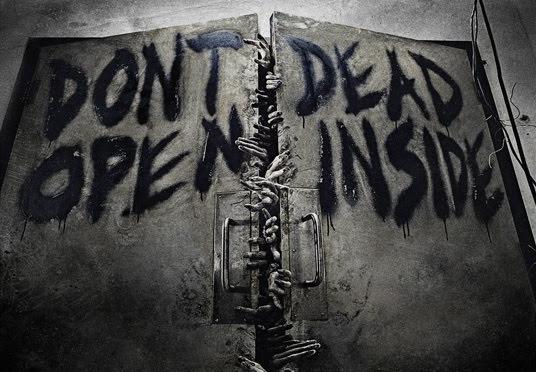
The Walking Dead (Frank Darabont, 2010 - )


Though I love it dearly, I have left Zombieland (Rubin Fleischer, 2009) off this list purely because I don’t think it follows my rules perfectly and because it’s not scary. It totally wins everything else, because of Bill Murray’s cameo.

Monday, December 7, 2009

Nearer, Father, Nearer

I'm currently writing an essay on art cinema and its representation of the body, gender, and identification. Ha. To me, the essay question is, in the words of Cher Horowitz, 'simply a jumping-off point to start negotiations.' Par exemple, take the essay I was supposed to write for the atrocious joke of a compulsory course, International Media Studies. I don't know how many of you out there are aware of this, but the discipline of Communication Studies is a vile pit of horror and despair. In order to avoid this, I would happily drink wasps, stab my eyes out with lit sparklers, and go on an over-60s singles cruise. But I digress. International Media Studies. I can't really remember the essay question - it was something about discussing theories of the way in which communication is enabled across countries or something yawn-worthy like that. Contraflow was in there somehow. It was supposed to be a 'research essay', in which you merely researched these boring theories and made some irrelevant comment on the way in which they applied to international media relations. I'm almost positive that essay would be laughed out of a HSC curriculum for being too simple.

So in the opening paragraph, I outlined exactly why this question and approach to the study of international media relations was tired and crap, and discussed Foucault's concept of power and how these power relations were enacted via the media - this constant back-and-forth between media outlets. I have no idea if this impressed any of my tutors (especially as one of them was ridiculous - she accused an entire class of plagiarism for using a modern version of the Harvard Referencing System - idiot), however, since I received a decent grade considering I failed an assignment due to my sheer refusal to stick to the assignment guidelines, I can only assumed one of them at least valued my articulately and well-written opinion of their ridiculous course.

And now I come to my current essay. Call me a slave to narrative cinema, but upon taking a course that focuses on the development of art cinema, I can now say with conviction that I hate art cinema with a passion reserved only for paedophiles, racists and homophobes. Ok, so maybe I don't hate them that much. I guess what I hate is that anything with a story is immediately dismissed as brainwashing rubbish enslaving a passive audience and a naked dude rubbing tomato sauce on his penis is considered a masterpiece. I'm almost positive this 'art film' has been recreated on many drunken football tours and buck's nights.

Many art films investigating the same thematic concerns as horror films have been automatically placed in a higher cultural category for far too long. For example, Stan Brakhage explores the demise of the human body in several films and while these are difficult to access, they are still praised for their contemplation of human frailty and ask the spectator to respond to the sight of the body in decay. So do horror films. Simply because a lot of them appear to be an excuse to show ample bosoms and graphic violence, they reveal what is usually unseen - death and the body's destruction. The unseen fascinates us, the unknown pulls us toward it and death is one of these things. Most of us don't know what our insides look like, so why not take a peak in the safety of the cinema or our own homes?

Zombie films contain the same themes of death and the contemplation of the body's destruction. Simon Pegg, my dream man, argues that slow-moving zombies are a metaphor for death, slow, yet sudden, always inevitable. Yet these are considered a lower form of cinema.

Artists who work in film always suggest that the experience of watching a narrative film is too passive, and their work challenges the spectator to be more active. Well, first of all, fuck you. The act of watching a film is never passive. They assume that simply because sitting in a room focusing your attention on a single space for a prolonged period of time is passive. It's an illusion. If watching a film was truly passive the images in front of us would not make any sense. Our brains and eyes are constantly assembling the footage we're given, and many films demand a physical and emotional response from us as well, such as horror, melodrama and, ahem, porn.

Many horror films privilege bodily sensation over narrative, and thereby form an alternative to narrative cinema. Sound familiar? Yeah, art film wankers say the same thing, only because a person decides it should be in a gallery it's better than a film about a guy cutting up teenagers with a chainsaw, or a film about the undead chowing down on human flesh like it's a tasty bucket of chicken.

After viewing many of these ridiculous films (and skipping more than the odd class out of sheer frustration), I have decided that the only value they have held is that now I know better how to make fun of them in my own narrative films. So how am I going to answer the essay question mentioned in the first line of this post? Well, essentially, I am going to suggest in an articulate and well-written prose style that art cinema and horror do the same shit, only horror does it better. Who knows, perhaps this may be my conclusion:

Art films are pretentious shit and horror films such as Wes Craven's Last House on the Left fucking rule.

Thursday, October 8, 2009

The 'Eye' in Film

A friend remarked on her Facebook status that she thinks she's destined to watch Un Chien Andalou and Meshes of the Afternoon at least once a year for the rest of her life. I feel as though I'm destined to listen to idiots talk about those two films at least once a year for the rest of my life.

I love Un Chien Andalou. I think it's so brilliant, and I think it's because the filmmakers (surrealist artists Salvador Dali and Luis Bunuel) have used conventional Hollywood narrative structure and applied it to a 'meaningless' set of images. My dear, dear friend Tori visited the Dali exhibit in Melbourne and found me a quote from Dali about the film, and though I can't remember it verbatim, it was roughly that the film was a deliberate attempt to subvert meaning, the images were put together in order so as to be completely meaningless.

While this is an interesting aim, it will never work. Film, much like all other art, cannot be meaningless. My old friend (I have a lot of friends, don't I?) Roland Barthes, whom I like to call Barty, hits the nail on the head in Death of the Author when he says that the death of the author means the birth of the reader. Meaning is instantly created whenever an artwork is received. As soon as someone looks at an artwork, they cannot help but create meaning for themselves.

I have watched Un Chien Andalou in three film courses; Genre Studies: The Horror Film, Screen Culture, and now Alternative Histories of Film and Video. The last two consider the film to be an art film, part of the surrealist movement's attempt to subvert meaning and narrative structure. But the first viewing hinted at a meaning beyond that.

The most memorable moment in this film is in the opening sequence. A barber (played by Bunuel), sharpens his razor and disturbed, he looks out at the night sky, and we see a full moon. He goes back inside and holds a woman's face in place. Then holds her eyes open. She doesn't struggle. I think you know what's about to happen.

We cut to a shot of the moon being slashed by a cloud, and we think this is the symbol for the woman's eye and the barber's razor. Nup. Merely a break - we cut back to the razor slicing the woman's eye open.

When I watched this in the horror course, people actually cried out in, well, horror, as it happens. People who laughed at me when I said the Blair Witch Project was truly scary because of the absence of a monster, while these hipsters all said the same film (The Omen. Pft!). I, meanwhile, did not cry out. I was fascinated. I hadn't seen anything like it before. And the fact that for all intents and purposes, it was real (Bunuel slices the eye of a dead sheep - not a lady), made it even more extraordinary, that a film made so long ago had the power to make people squirm.

In the seminar on Tuesday night, for Alternative Histories of Film and Video, we discussed how and why these 'old' art films may still have the power to shock people. We hinted at why, but never really talked about it in any great detail. And it's so important! We talk about it alllll the time in film and yet all we could say about it is that it's a fragile part of the body and we don't like seeing it damaged.

It's all about the eyes, my friend. In horror, the image of seeing an eye destroyed is pretty common. Bits of the body being cut up in general, in fact. So much of horror deals with the body - the uncanny (something familiar becoming unfamiliar and the ensuing sensation that produces), the abject (seeing parts of ourself that disgust us), and the unseen elements of death becoming seen) are all associated with images of the body destroyed in horror. So on one level, horror is shocking because we are shown exactly how fragile the body is and how it can be torn apart. So, yes, the people in my class that raised this point are quite correct.

But I think in the case of the eye, it's more complicated than that. Another tutor reminded us last week that we are a predominantly visual culture, that is, we watch more television and cinema than we read books. Screen Culture discussed the idea that we are constantly engaging with the world through a screen. The eye is the primary way we process information. Seeing it shut down makes us feel vulnerable because having our eye damaged, whether through illness, childhood accidents, altercations with Uma Thurman, or by having it sliced open, would mean that we would instantly lose our way of processing information.

We lose our way of identifying with characters. The camera is often referred to as the eye. In many horror films our eyes are restricted to the eyes of a killer, but rather than identifying with them we feel disoriented because their vision is often obscured. In narrative films in general, however, we are encouraged to see the camera as the eye, allowing us to view other people in a new way, and without guilt, it's been suggested.

Hmm, why is that more complicated than seeing our fragile little peepers torn apart? Because it's our worst nightmare. Of course, being blind is not the end of things. Radio programs prove that we cannot process information and create meaning without using our eyes. However, it's the eye that is possibly the body part used the most in processing information and seeing our worst fears realised on film is shocking. And it will always be shocking.

Un Chien Andalou